

Have you ever been so inquisitive about the intelligence and wonders brought by the Great Mayan civilization? Do you want to know there humble beginnings and remarkable contributions particularly in astrology? Keep on reading this article and be informed.
Mayan Astrology | The Birth of Exceptional Civilization
The Origin of Mayan Astrology
The age-old Maya, is a diverse group of primitive people who lived in Mesoamerica, now known as Mexico, El Salvador, Honduras, Belize and Guatemala. They are one of the most experienced and complex civilization in the Western Hemisphere. The Maya were the one in charge of the remarkable accomplishments in agriculture, communications, engineering and astronomy.
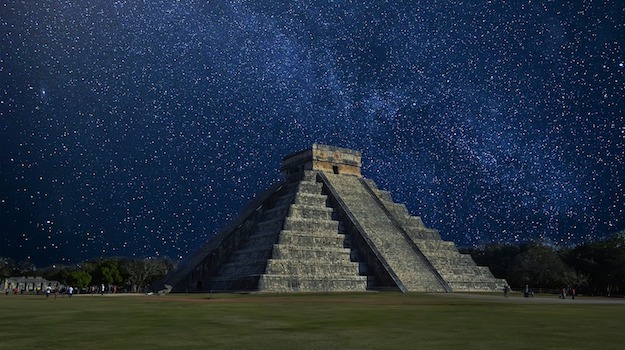
The Mayan Civilization
Their civilization was at its pinnacle from 300 A.D. to 900 A.D., known as the Classic Period. At this time, the Maya were able to obtain a complex understanding of the celestial sphere by observing the heavens. For agriculture, they discovered how to grow beans, corn, squash and cassava. In engineering, they learned how to establish refined cities through building great temples without advanced machinery. They used these to track the seasons for the whole year and determine their planting and harvesting time since most of them were aligned to the sun. For writing and communication, they were able to verbalize their thoughts using one of the world’s first written languages and they were also able to measure time using two intricate calendar systems which they inherited from the Olmec, the mastermind culture of all Mesoamerican custom and heritage.
Mayans’ First Systems and Astronomy
The Maya strongly depend in the guidance and impact of cosmic space. Accordingly, Mayan understanding and knowledge about celestial bodies was unconventional for their time. Some of which was their ability to predict solar eclipses and the two calendars that are as precise as what we use at present.
The first calendar, known as the Calendar Round, was based on two coinciding annual cycles- a 260-day sacred year and a 365-day secular day. In this system, each day was tagged with four identification: a day number and a day name in the sacred calendar and a day number and a month name in the secular calendar. Every 52 years is counted as a single interval, or Calendar Round. The calendar will reset itself after each interval like a clock.
The second calendar was devised by a priest in around 236 BC because fixing events in a definite chronology was hard to do in the Calendar Round. This calendar was called Long Count. This system identified each day by counting forward from a fixed date in the distant past. It works similarly to the Calendar Round, having cycles one interval after another. However, also known as ‘Grand Cycle’, the Long Count calendar’s interval was much longer. One Grand Cycle was equal to about 5, 139 solar years.
Furthermore, the Mayans did not own any advanced or state-of-the-art instruments for charting the positions of the celestial objects so their findings were done using their naked eye. They may have used the simplest instruments like crossed sticks to know the position.
Nevertheless. the Mayan were great builders, artisans and engineers of their time. Many of their temples and construction were aligned to help observers supervise position. Examples of their work were the buildings pointed to the midsummer or equinoxes, while other buildings had doorways and windows paralleled to the most northern or southern rising of Venus, one of the most significant heavenly bodies to the Mayan culture. Their accuracy was observed in their predictions of the orbit of Venus which lost only two hours in a 584-day cycle.
The Beginning of Mayan Calendar
The most obscure contribution among all Mayan discoveries to astronomy is their calendar, a complicated system of interlaced cycles that kept time even more precise than what we have today. This calendar system sustained much of the New Age romanticism surrounding the Mayans. They used varieties of calendars, intertwining them and give results of extremely accurate dates. Amazingly, the astronomer-priests of the Mayan civilization understood it very well.
The two main calendars were the Tzolk’in, a ceremonial 260-day calendar consisting of 13 numbers and 20 day names and the Haab, a vague 365-day calendar composed of 18 months of 20 days with a 5-day month affixed at the end of the year. They used 20 days for a month because it is based on their vigesimal numeric system, which has a based twenty system instead of base ten decimal system like ours.
These calendars ran simultaneously and were laced together by describing the date by the Tzolk’in number and name day, followed by the Haab number and name day. This intertwining process gave another unit for measuring time, the Calendar Round, a 52-year cycle when the dates began repeating themselves.
Chichen Itza
Mayan Astronomy was directed and influenced by their unique and rich mythology together with their belief in the structure and order of the celestial bodies which they understood as made of overlapping cycles, which are interconnected to each other. Understanding these cycles was an essential part to their predictions and understanding the desires of the gods and spirits. Also, time is a very vital part of the of the Mayan culture.
The Mayan people integrated their modern and progressive understanding of astronomy into their religious structures, buildings and temples. The pyramid located at Chichen Itza in Mexico is an example of their great works. It is situated according to the sun’s position during the spring and fall equinoxes. During sunset of these two days, the pyramid casts a shadow on itself that is parallel to a carving of the head of the Mayan serpent god. The shadow creates the serpent’s body and as the sun sets, the serpent looks like slithering down into the Earth.
The Fall of the Maya
Towards the beginning of the 11th century, the Mayan culture started to fall down. However, the reason behind the decline is still unknown and a matter of some debate today. Some believed that the Maya were abolished by war while other alleged it to the destruction of their trade routes. Still, others believe that the Maya’s agricultural system and dynamic advancement led to climate change and deforestation. Despite their fall, the legacy of the Mayan civilization, particularly their exceptional scientific and astronomical achievements lives on through the discoveries and studies that archaeologists continue to make about this remarkable ancient culture.
Here’s a short video introduction about the Mayan Astrology from Bizarre Necessities:
So now you have a glimpse of how Mayan influenced our present-day culture. Hopefully, this is article was able to provide what you need to know about this amusing civilization, aside from being blown away by their awesome intelligence and craftsmanship. Watch out for more articles coming up!
Got caught by zodiac signs? Click this link.
Like this? You’ll also like…
Mayan Astrology| Which Mayan Zodiac Sign Do You Belong?
Cars That Best Describe You Based On Your Zodiac Sign
Zodiac Signs and Love | 7 Sure-Fire Love Tips for a Taurus

Leave a Reply